Airbnb Management Lake City, MI: 7 Things Owners Must Know
- Andrew Reames
- May 21
- 14 min read

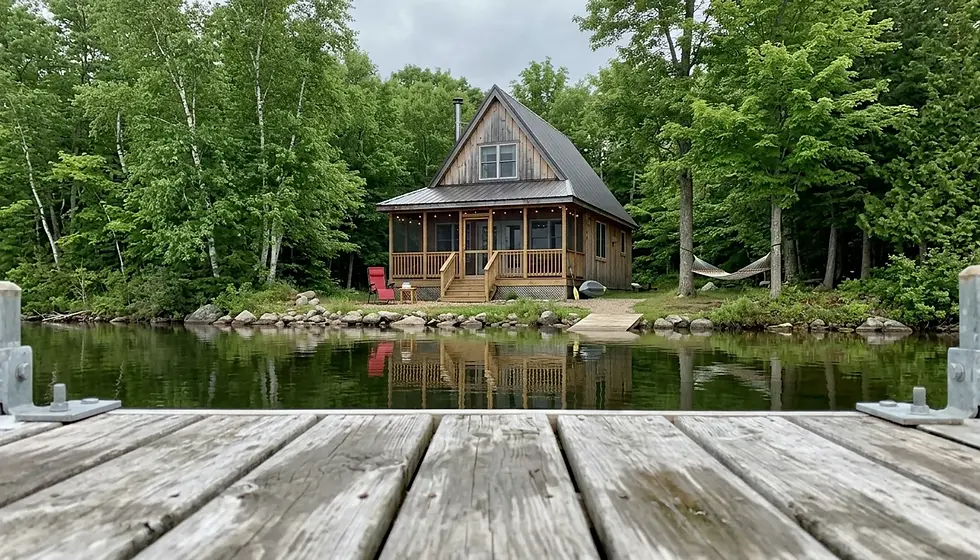
Airbnb management in Lake City, MI refers to the professional oversight of a short-term rental property, covering everything from dynamic pricing and guest communication to cleaning coordination and maintenance response. At Tidal Cohosting, we work with property owners across the Lake City market who want to earn strong rental income from their Michigan lake properties without managing every guest interaction and turnover themselves. The northern Michigan STR market has grown substantially, with AirDNA data showing listings on the north coast reaching 9,130 units by August 2026, up nearly 40% since 2021. Knowing how professional management works, and what it actually costs, puts you in a far stronger position as a Lake City property owner.
Lake City, MI sits in a high-demand northern Michigan STR corridor where July 2026 set an all-time record for booking nights, according to AirDNA via Traverse Ticker.
Full-service Airbnb management typically covers pricing, guest messaging, cleaning coordination, and maintenance response, not just listing creation.
Professional management fees in lake markets generally run 20-30% of gross revenue, with scope and local expertise varying considerably between providers.
Dynamic pricing is the single highest-impact lever for lake property revenue, given how sharply demand swings between July peaks and March lows in this market.
Tidal Cohosting manages 60+ properties across Michigan lake markets and coastal markets, with one client growing from $30,000 to over $75,000 in annual revenue in under a year.
Supply growth has stalled in northern Michigan, creating a favorable environment for well-managed properties that price and market aggressively.
What Does Airbnb Management in Lake City, MI Actually Include?
Airbnb management in Lake City, MI is a professional service where a co-host or management company takes over the day-to-day operations of your short-term rental so you can earn passive income without handling guest requests, turnover logistics, or pricing adjustments yourself. Specifically, the scope of a full-service management agreement typically covers six core functions: listing optimization, dynamic pricing, 24/7 guest communication, cleaning and turnover coordination, maintenance oversight, and owner reporting.
Many Lake City owners assume management just means someone answers guest messages. That is only one piece. A capable manager also controls your calendar strategy, adjusts nightly rates in response to local demand signals, coordinates your cleaning crew between same-day turnovers, and handles the 11pm maintenance call when a guest reports a broken water heater. For out-of-state owners in particular, those last two functions are worth the fee by themselves.
Not every company offers the same depth. Some national platforms handle pricing and communication remotely but rely on you to source and supervise your own cleaners. A local or regional management partner with an actual team on the ground in the Lake City area provides a meaningfully different service. Before signing any management agreement, confirm specifically who handles cleaning oversight, who responds to maintenance emergencies, and what the escalation process looks like when something goes wrong mid-stay.

How Much Do I Pay Someone to Manage My Airbnb in Lake City?
Airbnb management fees in Lake City, MI typically range from 20% to 30% of gross rental revenue for full-service management, though some national platforms advertise rates as low as 10% with a narrower scope of services. The right number to focus on is not the fee percentage in isolation; it is the net revenue you keep after fees compared to what you would earn managing the property yourself.
Here is the math that matters. If your Lake City cabin generates $50,000 annually and you pay a 25% management fee, you net $37,500 before expenses. But if professional pricing and listing optimization increase your gross revenue by 40%, your gross climbs to $70,000, and your net after the same 25% fee is $52,500. You pay more in absolute dollars to the manager, and you keep more money. That is why the fee percentage is a secondary consideration compared to the manager's ability to drive revenue growth.
Additional fee structures to watch for include setup fees (typically $200-500 for professional photography and listing creation), cleaning fees passed through to guests, and maintenance coordination markups. Ask any prospective manager to provide a full fee schedule in writing before you commit. The property management fee breakdown guide covers the full range of fee structures owners typically encounter when comparing providers.
Management Model | Typical Fee | What Is Included | Best For |
Full-Service Local Management | 20-30% of gross revenue | Pricing, guest comms, cleaning oversight, maintenance, reporting | Out-of-state owners, burned-out self-managers |
Co-Hosting / Co-Management | 15-25% of gross revenue | Guest comms, pricing support, calendar management; owner handles some tasks | Local owners who want partial help |
National Remote Platform | 10-20% of gross revenue | Pricing, listing optimization, guest messaging; cleaning often owner-sourced | Owners with local cleaning/maintenance already in place |
Self-Management | 0% fee | Everything; owner handles all functions personally | Owners with significant local time and hospitality experience |

Can I Hire a Company to Manage My Airbnb in Lake City?
Yes, you can hire a professional company to manage your Lake City Airbnb, and for most owners who do not live within driving distance of the property, doing so is the practical choice. Airbnb co-hosting and full-service management companies operate across the northern Michigan lake market, ranging from national platforms with remote teams to regional specialists with local staff who can physically respond to property issues.
The key distinction to understand before you hire is whether the company has genuine local presence in the Lake City and Osceola County area or whether they manage your property remotely through vendors you never meet. Remote management works for pricing and guest communication. It falls apart for same-day turnover emergencies, in-person maintenance coordination, and property inspections after difficult stays.
Tidal Cohosting provides hands-on management services in Lake City, MI as part of its Michigan lake market portfolio. That means a local team coordinates cleaning and turnover, responds to maintenance issues, and conducts property checks rather than relying on a remote coordinator to dispatch a stranger. For a deeper comparison of what local versus national management actually looks like in practice, the Houghton Lake property management guide walks through the local versus national trade-offs in detail for the Michigan lake context.
When evaluating management companies, ask for references from other Lake City or northern Michigan property owners specifically. A company that manages 200 properties in Florida is not the same as one with active operations in Osceola County. Local vendor relationships, knowledge of seasonal demand patterns on Missaukee County lakes, and familiarity with Michigan's STR regulatory environment are not things a remote team acquires quickly.
What Is the 80/20 Rule for Airbnb and How Does It Apply in Lake City?
The 80/20 rule for Airbnb refers to the principle that roughly 80% of your rental revenue comes from 20% of your calendar days, specifically the peak summer weeks, major holiday weekends, and high-demand shoulder season dates when competition is high and guests are willing to pay premium rates. In Lake City, MI, that 20% concentrates heavily in July, the first two weeks of August, Memorial Day weekend, Labor Day weekend, and Michigan-specific fall color weekends in late September and October.
This pattern shows up clearly in AirDNA data for the northern Michigan north coast market. July 2026 recorded the highest single-month STR demand ever in this market, with an 81.1% occupancy rate. March 2026, by contrast, sat at 30.2%. That is a 51-percentage-point swing between your best and worst months. Owners who price those peak 20% of days correctly capture the majority of their annual income. Owners who underprice them, or who block them for personal use without accounting for the revenue cost, underperform significantly.
The practical implication for management is that your Airbnb manager's most important job is not responding to guest messages in February. It is setting aggressive, accurate pricing for the July 4th week in late April, knowing when to stop accepting three-night bookings on either side of a holiday weekend to capture full-week reservations, and identifying the demand inflection points where rates can jump $80-100 per night without losing bookings. Most self-managing owners miss at least one of those decisions every year.
If you want to understand how peak season pricing specifically affects revenue potential in the Lake City area, the Lake City vacation rental pricing guide covers peak season strategy in detail.

What Is the 75/55 Rule for Airbnb and Does It Matter for Lake City Properties?
The 75/55 rule for Airbnb is an informal benchmarking framework that suggests a well-performing STR should target at least 75% occupancy during peak season months and maintain at least 55% occupancy during shoulder season months to generate competitive annual revenue. In practice, the rule functions as a quick diagnostic: if your Lake City property is hitting 75%+ in July and August but dropping well below 55% in May, June, and September, you likely have a pricing or listing visibility problem rather than a demand problem.
The northern Michigan STR market data supports this framing. AirDNA recorded a 72.3% occupancy rate for the broader north coast market in August 2026, and an 81.1% rate in July 2026. Hitting or exceeding those benchmarks in peak months is achievable for a well-positioned Lake City property with competitive pricing and strong listing quality. The harder challenge is the shoulder season, where Osceola County properties compete against a smaller pool of guests who are choosing between northern Michigan destinations based largely on price and listing quality.
Professional management improves both numbers. Peak occupancy improves because dynamic pricing captures demand at the right price point rather than leaving money on the table or scaring off bookings with an inflated flat rate. Shoulder season occupancy improves because a well-optimized listing with professional photography and strategic pricing attracts the smaller guest pool more reliably. Tidal Cohosting's approach to year-round revenue management addresses both gaps for its Lake City clients.
For additional context on what defines strong STR performance across Michigan lake markets, the short-term rental management Lake City guide covers common misconceptions about occupancy benchmarks in this specific market.
Why Is Dynamic Pricing the Most Important Service a Lake City Airbnb Manager Provides?
Dynamic pricing for Lake City Airbnb properties refers to the practice of adjusting nightly rates daily or weekly based on real-time demand signals, competitor availability, booking window patterns, and local event calendars, rather than setting a fixed price that applies regardless of market conditions. In a market with the occupancy volatility Lake City experiences, from 30% in March to 81% in July, a flat pricing strategy always leaves money on the table at some point in the calendar.
The average daily rate for STRs in the northern Michigan north coast market reached $445.91 in July 2026, according to AirDNA data cited by Traverse Ticker. That is a 49% increase from roughly $300 at the start of 2021. Owners who were pricing their Lake City cabins at 2021 rates in 2026 have given back a significant share of that market-driven rate appreciation. A management company that actively tracks this market and adjusts pricing accordingly captures that upside automatically.
Dynamic pricing also matters for minimum stay requirements, which most self-managing owners handle poorly. Requiring a 7-night minimum in July maximizes revenue when demand is high. Dropping to 2 or 3 nights in early June fills gaps that would otherwise sit empty. Knowing exactly when to shift between those modes requires monitoring competitor calendars and booking velocity, something professional managers do continuously and self-managing owners almost never have time to do well.
One Tidal Cohosting client came to us with a Lake City property generating $30,000 annually under self-management. Within 12 months of switching to professional management and dynamic pricing, that same property exceeded $75,000 in revenue. The property did not change. The pricing strategy did.
What Are the Biggest Mistakes Lake City Property Owners Make When Managing Their Own Airbnb?
Self-managing a Lake City Airbnb involves predictable failure points that show up consistently across the owners who eventually seek professional management help. Understanding these mistakes before they cost you bookings and reviews is the fastest way to improve your property's performance, whether you manage it yourself or hire a professional.
Flat-Rate Pricing That Ignores Seasonal Swings
The most common pricing error in lake markets is setting a rate in spring and leaving it unchanged through the season. Lake City demand swings 50+ occupancy percentage points between winter and peak summer. Owners who price for average demand are overpriced in slow months and underpriced in July, which is precisely backward. You lose bookings when you can afford to fill them and leave money on the table when you have maximum leverage.
Slow Guest Communication That Damages Search Ranking
Airbnb's search algorithm rewards fast response rates and penalizes slow ones. Owners who answer inquiries in 12-24 hours, rather than within 1-2 hours, drop in search visibility over time. In a market with 9,130 competing listings, that visibility penalty is expensive. A management company with dedicated communication staff eliminates this problem entirely.
Inconsistent Cleaning Quality Between Turnovers
Lake City properties often have same-day turnovers in July and August, where a 10am checkout and a 4pm check-in leave four hours for cleaning a 3-bedroom cabin. Self-managing owners who rely on a single independent cleaner face real risk: one cancellation and you have a property that is not guest-ready when your next party arrives. That scenario generates the 2-star review that follows your listing for months.
Ignoring Listing Optimization After Initial Setup
Most owners create a listing once and never revisit the title, description, or photo selection. Platform algorithms update. Competitor listings improve. Guest expectations evolve. A listing that ranked well in 2023 may be buried by 2026 if no updates have been made. Professional management includes ongoing listing maintenance, not just initial setup.
Missing Shoulder Season Revenue Opportunities
May, June, September, and October are not dead months in northern Michigan. Fall color season in late September and early October generates real demand. Fishing season opens in late April. Owners who price shoulder months aggressively and market to the right guest segments capture revenue that flat-rate, passive self-managers consistently miss. The vacation rental property management Lake City guide covers shoulder season strategy specifically.
How Do You Choose the Right Airbnb Management Company for a Lake City Property?
Choosing an Airbnb management company for a Lake City property requires evaluating five specific criteria: local operational presence, fee transparency, technology and reporting tools, revenue track record, and contract terms. Not every company meets all five. Understanding which criteria matter most for your specific situation helps you avoid the most common hiring mistakes.
Verify Local Operational Presence First
Ask directly: do you have staff or dedicated vendors physically located in the Lake City or Cadillac area? If the answer involves a network of independent contractors dispatched through an app, your cleaning and maintenance coordination is only as reliable as whoever happens to be available that day. A company with an established local team coordinates turnovers and maintenance with a reliability that remote management simply cannot match.
Tidal Cohosting operates with full-time cleaning and maintenance teams serving its Michigan lake market clients, including Lake City. That is a meaningful difference from national platforms that coordinate your property remotely while you source local vendors yourself.
Read the Contract Before Comparing Fees
Fee percentage comparisons are meaningless without understanding what the fee covers. A 15% fee that excludes cleaning coordination, charges a setup fee, and marks up maintenance calls may cost more in practice than a 25% all-inclusive fee. Ask for a complete list of every potential charge before signing. The red flags to watch for when hiring a property manager covers contract terms that should give you pause.
Ask for Revenue Performance Data
Any management company worth considering should be able to provide occupancy and ADR benchmarks for Lake City properties in their portfolio. If they cannot, or if they decline to share performance data, that tells you something important. Strong managers are confident enough in their results to show them.
Understand the Exit Terms
Long-term management contracts with 6-12 month lock-in periods and stiff cancellation penalties protect the manager, not you. Look for agreements with reasonable notice periods (30-90 days is standard) and no penalty for termination with proper notice. Your ability to switch providers if performance falls short is a genuine protection that deserves attention before you sign.
Frequently Asked Questions About Airbnb Management in Lake City, MI
What does a Lake City Airbnb property manager actually do on a day-to-day basis?
A Lake City Airbnb property manager handles guest inquiries and booking confirmations, adjusts nightly pricing based on market demand, coordinates cleaning and turnover between guest stays, responds to maintenance issues, monitors guest reviews, and provides owners with regular performance reports. Full-service management removes every operational task from the owner's plate, not just guest communication.
How much can I realistically earn from a Lake City, MI vacation rental with professional management?
Earnings vary by property size, location relative to the lake, amenity quality, and management effectiveness. What is verifiable is that the northern Michigan north coast STR market recorded its highest-ever demand month in July 2026, with average daily rates reaching $445.91 according to AirDNA data. Professional management with dynamic pricing typically outperforms self-management significantly; one Tidal Cohosting client in this market doubled their annual revenue to over $75,000 in under a year. Results vary by property and market conditions.
Is it worth hiring an Airbnb manager for a Lake City property I only rent seasonally?
For seasonal rentals, the value of professional management concentrates in those high-demand months where pricing decisions have the biggest impact. If your property is only available June through September, a management company that maximizes those 16 weeks, capturing peak July rates and filling shoulder gaps, often generates more than enough additional revenue to cover the management fee and then some.
What are the short-term rental regulations in Lake City, MI that I need to know about?
STR regulations in Michigan vary by municipality, and Osceola County ordinances should be confirmed directly with local government before listing. Notably, AirDNA has reported that STR regulations in the Traverse City area have contributed to a plateauing of listing supply in the broader north coast market since 2026. Property owners should verify current permit requirements with Osceola County and any applicable township before listing a property on Airbnb or Vrbo.
What is the difference between co-hosting and full-service Airbnb management for a Lake City property?
Co-hosting is a collaborative model where a professional co-host handles specific operational tasks (typically pricing, guest communication, and calendar management) while the owner retains responsibility for cleaning, maintenance coordination, or other functions. Full-service management transfers all operational responsibilities to the management company. Co-hosting suits owners who live locally and want support with the tasks they find most burdensome; full-service management suits out-of-state owners or those who want complete hands-off ownership.
How quickly can I expect to see revenue improvement after switching to professional Airbnb management?
Most property owners see measurable revenue improvement within the first full booking season under professional management, as dynamic pricing adjustments and listing optimization take effect relatively quickly. The most dramatic improvements typically occur in the first 12 months as a manager establishes competitive pricing baselines, improves listing visibility, and fills previously empty shoulder season dates. Operational improvements like cleaning quality and guest communication affect review scores over a slightly longer timeframe.
Should I use a national Airbnb management platform or a local Lake City management company?
National platforms offer pricing technology and distribution reach but typically rely on locally sourced vendors for cleaning and maintenance, which creates quality control gaps. Local management companies with established teams and vendor relationships in the Lake City area provide more reliable turnover coordination and faster maintenance response. For out-of-state owners especially, local operational presence matters more than platform scale when something goes wrong mid-stay.
What Lake City Property Owners Should Do Next
Airbnb management in Lake City, MI is not a commodity service. The northern Michigan STR market has grown nearly 40% in listing count since 2021 while demand continues to set records, creating real competition among properties for the same pool of guests. In that environment, the quality of your management, specifically your pricing strategy, listing visibility, and turnover reliability, determines whether your Lake City property outperforms the market or gets lost in it.
Supply growth in this market has largely stalled, with AirDNA data showing only 113 net new listings added between August 2026 and August 2026. That supply constraint combined with sustained demand growth is a favorable market condition for well-managed properties in 2026. The owners who capture that upside are the ones with professional pricing, optimized listings, and reliable guest experiences. The ones who miss it are still adjusting rates manually once a month and wondering why July filled later than expected.
Whether you are evaluating your first management company, reconsidering a national platform that lacks local presence, or trying to understand what professional co-hosting actually covers, the decision framework is consistent: verify local operational capability first, understand the full fee structure before comparing percentages, and hold any prospective manager accountable to actual revenue benchmarks from comparable Lake City properties.

If your Lake City vacation rental is not generating the passive income you expected, or if managing it yourself has become more work than the income justifies, Tidal Cohosting offers full-service property management and co-hosting services in the Lake City market. With 60+ properties managed and a documented track record of doubling owner revenue, the team handles pricing, guests, cleaning, and maintenance so you can focus on the investment rather than the operation. Visit tidalpartners.co to start a conversation about your property's potential.



Comments