Short Term Rental Management Conway, SC: A 2026 Owner's Review
- Andrew Reames
- May 17
- 14 min read

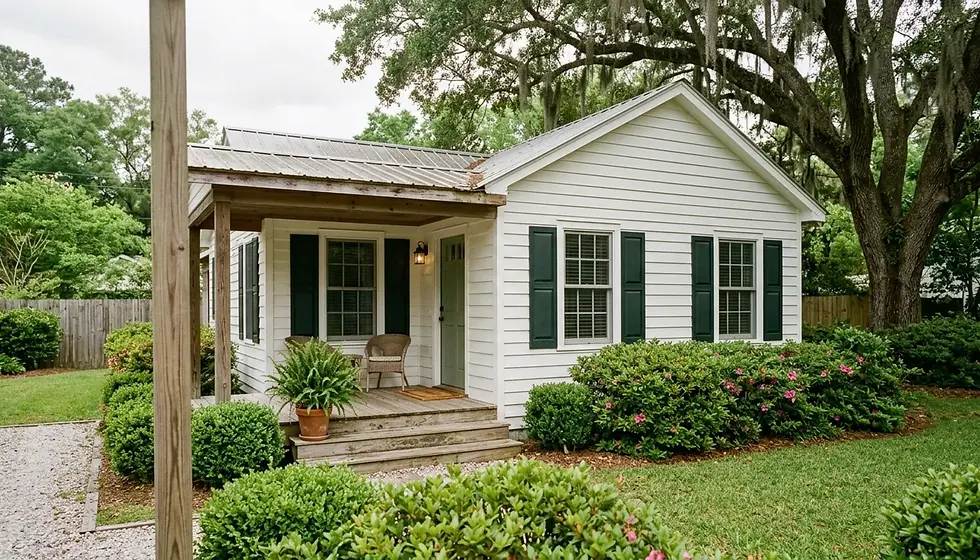
Short term rental management in Conway, SC refers to the professional oversight of vacation rental properties, covering guest communication, dynamic pricing, cleaning coordination, maintenance dispatch, and regulatory compliance so property owners can generate passive income without hands-on involvement. Conway's STR market posted an average daily rate of $202.20 and a 46% occupancy rate as of the latest AirDNA data, with RevPAR reaching $84 year-over-year, a 6% increase. For property owners evaluating whether to self-manage or hire a professional, the market data tells a clear story: Conway is a growing, mid-tier STR market with solid fundamentals and rising visitor traffic, but capturing its full revenue potential requires more than listing a property and waiting.
Conway's STR market is growing: Active listings rose 8% year-over-year per AirDNA, and downtown Conway welcomed 2.8 million visitors in 2026, exceeding city projections by 800,000 people.
Average STR revenue sits at $18,400 annually per AirDNA, but professionally managed properties using dynamic pricing and listing optimization consistently outperform that baseline.
Tax compliance matters immediately: Conway operators owe a combined 5% accommodations tax (3% city, 2% county), remitted to the South Carolina Department of Revenue by the 20th of each month.
Management fees in this market typically range from 15-30% of gross revenue, depending on service scope and whether you work with a local operator or a national platform.
Local managers outperform national platforms on owner communication, maintenance response speed, and market-specific pricing, particularly during Conway's event-driven demand spikes.
Tidal Cohosting manages 60+ properties across Conway, SC and the broader Grand Strand, and one client grew annual revenue from $30,000 to over $75,000 in under a year under professional management.
Conway, SC sits roughly 15 miles inland from Myrtle Beach along the Waccamaw River, and its character as an STR market is distinct from the oceanfront strip. The city draws families, couples, and event travelers to its historic downtown, Riverwalk district, and seasonal programming. October alone pulled 450,000 visitors in 2026, driven by the city's Halloween events and holiday decorating program, which generated a 20% year-over-year increase in downtown hospitality fee collections. That kind of event-based demand spike is exactly where professional management earns its fee.
At Tidal Cohosting, we manage vacation rental properties across Conway, SC and the surrounding Grand Strand market, and the patterns we see in this market are consistent: owners who treat pricing as a static number leave significant revenue on the table during event weekends and fall foliage season, while operators who invest in listing quality and responsive guest communication earn repeat bookings and stronger review profiles. This review covers what short term rental management in Conway actually looks like in 2026, who the key players are, what you should pay, and how to decide whether professional management is worth it for your specific property.

What Does the Conway, SC STR Market Look Like in 2026?
The Conway, SC short-term rental market is a mid-size, inland vacation rental market with strong event-driven demand, growing visitor traffic, and a predominantly professional operator base. According to AirDNA data, Conway had 180 active STR listings as of the latest measurement period, with listings growing 8% year-over-year. The market earned an AirDNA Market Score of 73 (Good), with an Investability score of 86 and a Rental Demand score of 85, both notably strong for an inland South Carolina city.
Specifically, 69% of Conway STR listings are available 271 to 365 nights per year, which signals a predominantly professional or semi-professional operator base rather than casual hosts renting a second bedroom a few weekends per year. That matters for management quality: you are competing against operators who treat this as a real business, not a hobby.
The most common listing type is entire home rentals, which represent 76% of active inventory. Airbnb dominates distribution, capturing 62% of listings, with 34% listed on both Airbnb and VRBO and 4% on VRBO exclusively. For owners trying to maximize reach, dual-platform listings are standard practice in this market.
Visitor projections for 2026 are positive. City officials, citing the 2026 milestone of 2.8 million downtown visitors per Spectrum Local News, project approaching 3 million visitors in 2026. The Riverwalk expansion project, adding boardwalks and a public beach to downtown Conway, is expected to further increase visitor appeal and STR demand. That infrastructure investment is a long-term tailwind for property owners who commit to the market now.
How Do Conway STR Management Companies Actually Compare?
Short term rental management companies operating in Conway, SC range from local operators with deep Grand Strand market expertise to national platforms that manage tens of thousands of listings across the country. The performance gap between these two categories is real, and it shows up most clearly in owner communication, maintenance response times, and the ability to price accurately around local demand events specific to Conway.
Below is a structured comparison of the key management approaches available to Conway property owners in 2026, using verified performance benchmarks from the AirDNA and Airbtics data compiled for this market.
Company Type | Management Fee | Local Presence | Dynamic Pricing | Owner Communication | Best For |
Local Full-Service (e.g., Tidal Cohosting) | Typically 20-30% | Yes, in-market teams | Yes, actively managed | Direct access, responsive | Owners who want local accountability |
National Platform (e.g., Evolve) | Typically 10-15% | No, contractor-based | Yes, algorithm-driven | Ticket-based, slower | Budget-conscious owners, tech-comfortable |
National Full-Service (e.g., Vacasa) | 25-35%+ | Regional, not hyper-local | Yes, proprietary tools | Structured, impersonal | Owners who want hands-off national brand |
Self-Management | 0% fee, but full time cost | Owner-dependent | Manual only | Owner handles everything | Local owners with significant time availability |
Evolve, which manages over 36,000 listings nationally, reported a 59% occupancy rate and $343 average daily rate across its Conway portfolio per Airbtics data. Those numbers are strong, but Evolve operates on a contractor model for cleaning and maintenance, which means quality control varies property by property. For Conway owners dealing with same-day turnovers during peak fall season, that variability is a real operational risk.
For a detailed breakdown of what professional management companies charge in South Carolina, see this analysis of property management fees across South Carolina.

What Are the STR Regulations and Tax Rules in Conway, SC?
Short term rental regulations in Conway, SC require operators to obtain a business license from the City of Conway before legally listing a property on Airbnb, VRBO, or any other platform. Operating without this license exposes you to fines and potential revocation of rental privileges. This is a non-negotiable first step, and it is one that a surprisingly high percentage of new STR operators in smaller South Carolina markets skip entirely.
On the tax side, Conway STR operators face a combined 5% accommodations tax: a 3% city tax and a 2% Horry County tax. Both must be collected from guests and remitted to the South Carolina Department of Revenue by the 20th of each month. Failure to remit on time creates penalties that compound quickly.
Note that several competing articles on Conway STR management contain a significant content error: they paste in Florida or other state tax rates and regulations as if they apply to Conway. They do not. The numbers above are specific to Conway, SC and Horry County. Always verify current rates with the South Carolina Department of Revenue directly, as accommodations tax structures can change with legislative sessions.
Zoning compliance is a third layer that often surprises property owners. Conway's local zoning laws restrict where STRs can legally operate within the city limits. Before purchasing or listing a property specifically for short-term rental use, verify the zoning classification at the City of Conway planning department. A property zoned for single-family residential in a restricted overlay may be subject to additional requirements or prohibitions.
Safety requirements are straightforward but carry real enforcement weight. Every STR property in Conway must be equipped with working smoke detectors and a fire extinguisher. Non-compliance can result in fines or revocation of the business license. A professional management company handles this as part of onboarding. If you self-manage, build an annual safety inspection into your operating calendar.
If you want to compare how Conway's regulatory environment stacks up against a nearby coastal market, the Conway vacation rental property management guide covers the self-managing versus hiring decision in detail.
What Does Short Term Rental Management in Conway Actually Cost?
Short term rental management fees in Conway, SC typically range from 15% to 30% of gross revenue, depending on service scope, local versus national operator, and whether cleaning is bundled into the management fee or charged separately. RedAwning's publicly available fee tiers for the market illustrate the range: Essential at 10%, Essential Plus at 15%, and Full Service at 18%. Local full-service operators who provide in-house cleaning teams, maintenance dispatch, and active revenue management tend to price toward the higher end of the range because the service scope is substantially broader.
Here is the math that property owners often overlook. At an average annual revenue of $18,400 (per AirDNA), a management fee of 25% costs roughly $4,600 per year. But a professional manager who lifts your annual revenue to $28,000 through dynamic pricing and listing optimization costs the same $7,000 in absolute dollars while netting you $21,000 versus $18,400 self-managed. The fee is not the number that matters. The net income is.
One Conway-area property owner working with Tidal Cohosting grew annual rental revenue from $30,000 to over $75,000 in under a year. The primary drivers were listing optimization that improved Airbnb search rank, dynamic pricing adjustments calibrated to Conway's event-driven demand calendar, and consistent 5-star reviews from faster guest communication response times. That is a 150% revenue increase, which no management fee percentage erases.
Additional cost variables to factor in:
Cleaning fees: Some managers bundle turnover cleaning into the management percentage. Others charge it separately, typically passed through to guests. Clarify this before signing.
Maintenance markup: Some national platforms mark up vendor invoices by 10-15%. Local operators with established vendor relationships generally do not.
Photography and onboarding: Local operators often include professional photography in onboarding. National platforms may charge separately or use in-house tools of varying quality.
Minimum stay policy impact: Conway's most common minimum stay is 30-plus nights (47.2% of listings), followed by 2-night minimums at 31.1%. Your management company's minimum stay strategy directly affects both occupancy rate and guest quality.
For a broader view of fee structures across the region, the property management fee percentage guide breaks down what owners actually pay in 2026.
Local vs. National STR Management: Which Is Better for Conway?
Local short term rental management companies in Conway, SC offer a fundamentally different operating model than national platforms like Evolve or Vacasa, and for most Conway property owners, the local advantage is decisive. Local operators maintain in-market cleaning and maintenance teams with direct accountability to a specific property. National platforms coordinate through contractor networks, which introduces variability that is difficult to control remotely.
The distinction shows up most clearly in three scenarios. First, same-day turnovers during Conway's peak October event weekends, when cleaning crews are in high demand and a contractor who cancels last-minute creates a guest check-in disaster. Second, maintenance emergencies at 10pm on a Saturday, when a guest reports a non-functioning HVAC. A local manager with an established vendor relationship resolves this in hours. A national platform generates a work order that may not be actioned until Monday. Third, pricing around local events specific to Conway's demand calendar, including the Halloween programming that drove 450,000 October visitors in 2026 and the Riverwalk seasonal programming. A local manager prices into these windows proactively. A national algorithm reacts after the fact.
National platforms do have a genuine advantage in distribution reach and brand recognition. Evolve's 36,000-listing network provides marketing scale that a boutique local operator cannot match on a listing-by-listing basis. For owners who primarily want listing exposure and are comfortable managing cleaning and maintenance coordination themselves, a national platform's lower fee tier may be appropriate.
But for out-of-state owners, burned-out self-managers, and owners with properties in the $150,000-plus range who cannot afford the cost of a bad review or a preventable maintenance incident, local full-service management is the stronger choice. The fee differential is smaller than most owners assume when you account for revenue lift, vendor cost efficiency, and avoided crisis management.
For comparison, the Short Term Rental Management Myrtle Beach guide covers this local versus national question in the context of the adjacent oceanfront market, where the stakes of same-day turnover failures are even higher.
What Should You Look for When Hiring a Conway STR Manager?
Hiring a short term rental management company in Conway, SC is a business decision that directly affects your property's revenue, condition, and guest review profile. The right evaluation process focuses on operational specifics, not marketing claims. Here is what to assess before signing any management agreement.
Cleaning and Maintenance Structure
Ask specifically whether the company uses in-house cleaning teams or third-party contractors. In-house teams have a direct accountability relationship with the management company and consistent training standards. Contractor networks are more flexible but less reliable during high-demand periods. For Conway's event-driven peak weeks, reliability matters more than flexibility.
Dynamic Pricing Approach
A manager who sets a seasonal rate twice a year and leaves it there is not managing your revenue. Real dynamic pricing means daily rate adjustments based on competitor availability, local event calendars, booking window behavior, and historical occupancy data. Ask your prospective manager to describe their pricing review frequency and the tools they use. Legitimate operators use platforms like PriceLabs or Wheelhouse and apply human judgment on top of algorithmic outputs.
Owner Communication Protocol
Monthly owner statements are a minimum, not a differentiator. Ask how you will be notified of maintenance issues, how quickly you can expect a response to owner inquiries, and whether you will have access to a real-time owner portal showing booking activity and revenue. Lack of transparency is one of the most consistent red flags in property management agreements.
For a full list of warning signs to avoid, the 7 Red Flags When Hiring a Property Manager guide covers the specific contract terms and behavior patterns that should give you pause before signing.
Regulatory Compliance Handling
Ask directly: does the management company obtain the City of Conway business license on your behalf, and does it handle the monthly 5% accommodations tax remittance to the South Carolina Department of Revenue? Some management contracts explicitly exclude regulatory compliance. If compliance falls to you as the owner, build it into your calendar and budget accordingly.
Listing Quality and Platform Coverage
Request examples of listing photography and titles from properties the company currently manages. Professional listing photography is a proven driver of booking conversion. Given that 62% of Conway STR bookings flow through Airbnb, your Airbnb listing quality is your primary revenue lever. A manager who relies on smartphone photos for a $200-per-night property is leaving conversion rate on the table before a single guest reads the description. For context on what listing optimization involves, the Airbnb Listing Optimization guide outlines the specific factors that affect search rank and booking rate.

What Is the Seasonal Demand Calendar for Conway STR Properties?
Conway, SC short-term rental demand follows a distinct seasonal pattern that differs meaningfully from the oceanfront Myrtle Beach market, and understanding that calendar is essential for pricing strategy. Summer months represent Conway's primary peak, driven by Grand Strand proximity and inland family travel. But Conway has a stronger event-driven shoulder season than most comparable inland markets, which creates revenue opportunities that flat seasonal pricing misses entirely.
Specifically, October is Conway's most dramatic demand spike. The city attracted 450,000 visitors in October 2026 alone, per Spectrum Local News, driven by Halloween-themed programming and the holiday decorating initiative that generated a 20% year-over-year increase in downtown hospitality fee collections. A property priced at its standard fall rate during those weekends is significantly underpriced relative to actual demand.
The Riverwalk expansion project underway in Conway is expected to shift the demand calendar further by creating year-round recreational appeal beyond seasonal tourism. Boardwalks and public beach access downtown extend visitor interest into winter and spring periods that currently see softer STR occupancy. For owners buying into the Conway market in 2026, this infrastructure investment supports a longer-term revenue growth thesis beyond the current 46% annual occupancy rate.
Summer weeks, particularly those surrounding Fourth of July and Memorial Day, follow Grand Strand demand patterns closely. Properties positioned within a 20-minute drive of the Myrtle Beach oceanfront benefit from overflow demand when beachfront inventory tightens. Pricing Conway properties to capture that spillover demand during peak beach weeks requires coordination with the broader Grand Strand pricing environment, which is another area where a locally active management company outperforms a one-size-fits-all national algorithm.
For a detailed revenue benchmark comparison with the adjacent market, the Myrtle Beach vacation rental income benchmarks guide provides 2026 revenue data by property type across the Grand Strand.
Frequently Asked Questions About Short Term Rental Management in Conway, SC
What is the average management fee for short term rental management in Conway, SC?
Short term rental management fees in Conway, SC typically range from 15% to 30% of gross revenue, depending on service scope and company type. National platforms like Evolve operate at the lower end (10-15%), while local full-service operators that include in-house cleaning teams, active revenue management, and maintenance dispatch typically charge 20-30%. When evaluating fees, calculate net income rather than comparing percentage points in isolation: a higher-fee local manager who lifts annual revenue by $10,000 produces better owner economics than a lower-fee platform that delivers baseline performance.
Do STR operators in Conway, SC need a license to rent on Airbnb or VRBO?
Yes. STR operators in Conway, SC are required to obtain a business license from the City of Conway before legally listing a property on any short-term rental platform. Additionally, properties must comply with local zoning laws that restrict where STRs can legally operate. Safety requirements include working smoke detectors and a fire extinguisher at the property. Operating without proper licensing can result in fines and revocation of rental privileges.
What taxes do Conway, SC STR operators owe?
Conway STR operators owe a combined 5% accommodations tax: a 3% city accommodations tax and a 2% Horry County accommodations tax. Both are collected from guests and remitted to the South Carolina Department of Revenue by the 20th of each month. Some national competitor articles incorrectly cite Florida tax rates for Conway; the 5% combined figure reflects the actual South Carolina and Horry County requirements as of 2026.
What is the average annual revenue for a short-term rental in Conway, SC?
According to AirDNA data, the average annual STR revenue in Conway, SC is $18,400, with an average daily rate of $202.20 and a 46% occupancy rate. Properties managed with dynamic pricing and optimized listings consistently outperform the market average. One property in the greater Conway and Grand Strand market managed by Tidal Cohosting grew from $30,000 to over $75,000 in annual revenue in under a year through listing optimization and active revenue management.
Should I hire a local or national STR management company for my Conway property?
For most Conway property owners, a local management company with in-market cleaning and maintenance teams outperforms national platforms in operational reliability, especially during Conway's event-driven peak weeks in October and summer. National platforms offer lower fee tiers and broad distribution, which suits owners comfortable handling some operational coordination themselves. If your property is located 20-plus minutes from your home or if you are an out-of-state investor, local full-service management is typically the stronger choice given maintenance response time requirements and the city's seasonal demand volatility.
What is co-hosting and is it available in Conway, SC?
Co-hosting refers to a shared management model where a professional co-host handles day-to-day operations (guest communication, cleaning coordination, check-in logistics, platform management) while the owner retains oversight and involvement at a level they choose. Tidal Cohosting offers co-hosting services in Conway, SC as an alternative to full-service management, making it a practical option for owners who want operational relief without handing over complete control of their property.
How do I know if my Conway rental is underperforming?
Compare your property's occupancy rate and average daily rate against the Conway market benchmarks: 46% occupancy and $202.20 ADR per AirDNA. If your occupancy is consistently below 40% during summer peak months, or if your ADR sits more than 15% below comparable listings in your area, your pricing strategy or listing quality is likely the constraint. A professional STR management company offering a revenue audit can identify the specific gaps, whether in listing photography, platform distribution, pricing cadence, or review velocity.
Is Professional Short Term Rental Management in Conway Worth It?
Professional short term rental management in Conway, SC is worth it for any owner who values revenue certainty over the marginal cost savings of self-management. The Conway market's 2026 trajectory is positive: visitor traffic growing toward 3 million annually, Riverwalk infrastructure expanding year-round appeal, and event-driven demand creating seasonal spikes that reward active pricing management. But those opportunities require systems that most self-managing owners do not have in place: daily pricing adjustments, professional listing photography, 24/7 guest communication, and a reliable cleaning crew who shows up on a holiday weekend when a guest is checking in at 3pm.
The decision is straightforward for out-of-state owners and investors who cannot realistically coordinate Conway operations from a distance. For local owners who manage one property and genuinely enjoy the hosting experience, self-management is viable if occupancy stays above the market average. But as soon as a second property enters the picture, or as soon as a maintenance emergency reveals the limits of a solo coordinator network, the case for professional management becomes immediate and concrete.
Managing a vacation rental well is entirely achievable. The real question is whether you should be the one doing it, or whether your time and your property's performance are both better served by a management partner with the local systems already in place. In Conway's growing STR market, that question is worth answering before another peak October passes at underperforming rates.

If you are ready to stop leaving revenue on the table in Conway's growing STR market, Tidal Cohosting offers full-service property management, co-hosting, dynamic pricing, and listing optimization for Conway, SC and the broader Grand Strand. With 60+ actively managed properties and a track record that includes growing one owner's annual income from $30,000 to over $75,000, the team brings both local market expertise and proven operational systems to every managed property. Visit tidalpartners.co to start the conversation.


Comments